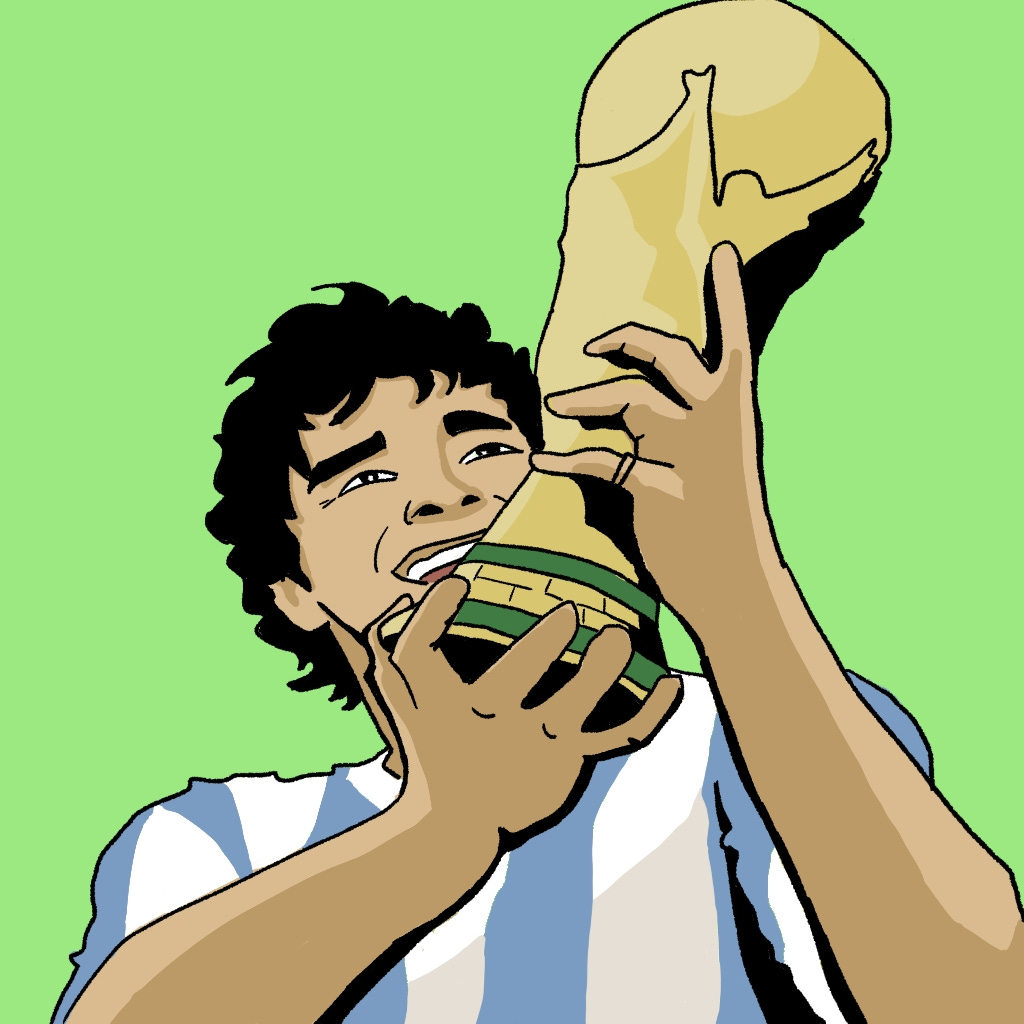
From the Ashes to Triumph: The Story of Italy at the 1982 World Cup
How Victory in Spain Marked the Renaissance of a Wounded Country and Opened the Door to the Laid-back Eighties

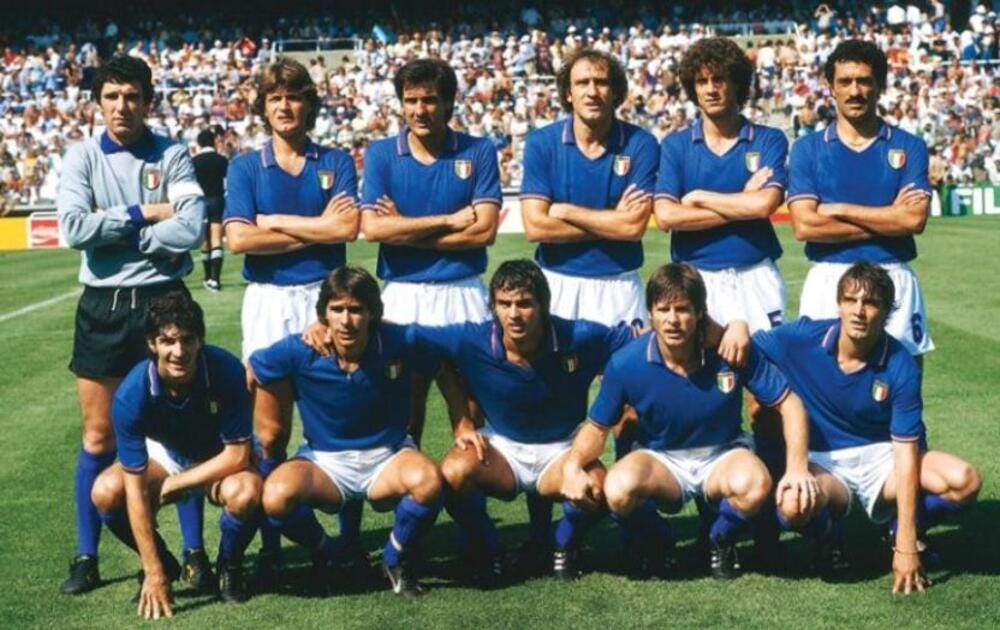
In 1980, Italy was a wounded country, marked by a decade of massacres and tension. The Totonero scandal shook football: illicit betting and match-fixing engulfed legendary clubs like AC Milan and Lazio, both relegated to Serie B. At the same time, players like Paolo Rossi were banned from competition. Trust in football — a national passion — faltered.
Just a few months later, on August 2, the Bologna massacre, a terrorist attack at the city’s central train station orchestrated by far-right extremists, killed 85 people and injured more than 200, leaving a deep scar on the nation. The Anni di piombo — the “Years of Lead” — and the Strategia della Tensione (Strategy of Tension), continued to poison the new decade with violence and instability, heightening a climate of fear and mistrust, especially after the Mafia murdered the Sicilian politician Pio La Torre.
When Italy prepared to take part in the 1982 World Cup in Spain, expectations were low. Carlo Ancelotti and Roberto Bettega were both sidelined with knee injuries and would miss the tournament. La Nazionale headed to Spain amid controversy and skepticism. Rossi, having just served his suspension after being implicated in the Totonero Scandal, was out of shape. Coach Enzo Bearzot was under fire, especially for leaving out two of the most in-form players in Serie A: Evaristo Beccalossi, Inter's number 10, and Roberto Pruzzo, Roma’s striker and the league's top scorer in 1981–82.
The Totonero Scandal 💸
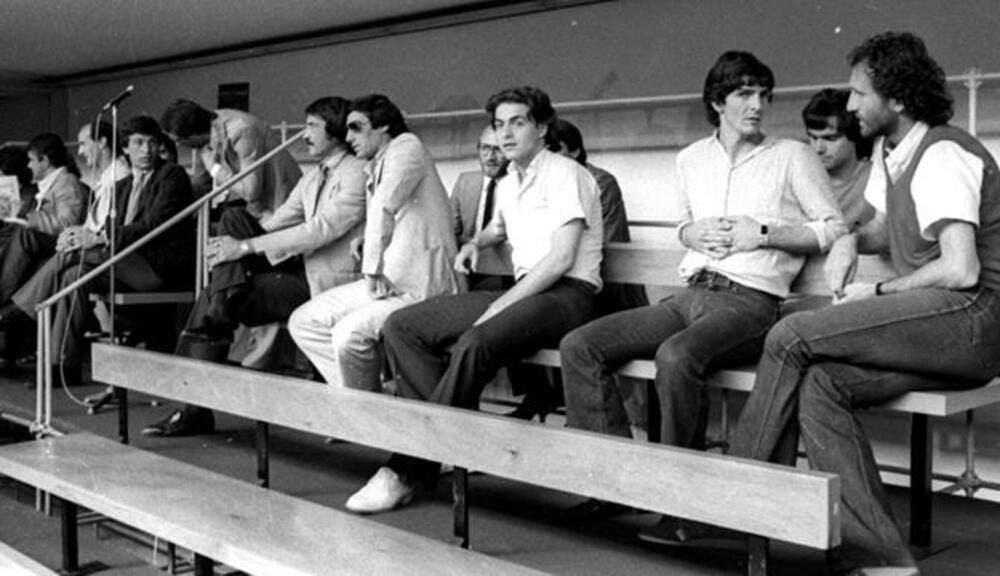
The Totonero scandal, which erupted in 1980, rocked Italian football by exposing a toxic system of illegal betting and match-fixing. It was triggered by complaints from two Roman businessmen, Massimo Cruciani and Alvaro Trinca, who accused several players of manipulating games to profit from Totonero. This underground betting network operated outside the legal Totocalcio system.
The investigation led to the arrest of multiple players on March 23, 1980, during an active Serie A matchday. Among the clubs involved, AC Milan and Lazio were relegated to Serie B — an unprecedented disgrace for such prestigious teams. Players like Paolo Rossi, Bruno Giordano, and Lionello Manfredonia were suspended. Others, like Ricky Albertosi and Giuseppe Wilson, were permanently banned from football.
The scandal also implicated clubs such as Avellino, Bologna, and Perugia, which faced various penalties and fines. Totonero shattered players’ reputations and altered the course of Italian football, ushering in stricter regulations and renewed scrutiny. It marked the end of an era — the moment when Italian football lost its innocence.
Illegal betting would return in 1987–88, when Napoli deliberately lost their grip on the title. With nearly all bets favoring a Napoli championship, the Giuliano clan from Naples’ Forcella district couldn’t afford to pay out. Allegedly, they threatened some Napoli players, who underperformed, allowing AC Milan to snatch the title.
Paolo Rossi: The Twist of Fate ⚽
As mentioned, Rossi was out of shape and under pressure. During the group stage, Italy struggled: three disappointing draws — 0-0 with Poland, 1-1 with Peru, and 1-1 with Cameroon — saw them barely scrape through as runners-up. Bearzot imposed a press blackout amid harsh criticism, especially over his decision to include Rossi, who had yet to score.
In the second group stage — dubbed the "Group of Death" — Italy faced reigning champions Argentina, led by Maradona, and tournament favorites Brazil, featuring a dazzling lineup: Zico, Sócrates, Junior, Cerezo, and Falcão.
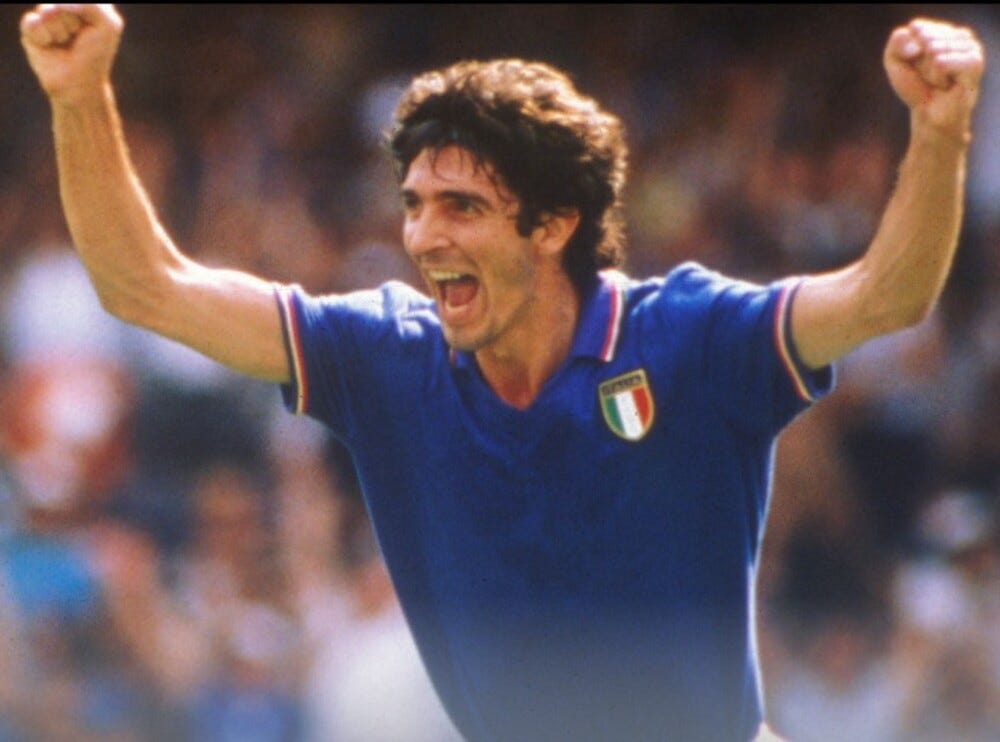
Against all odds, Italy beat Argentina 2–1, with Claudio Gentile effectively neutralizing Maradona. But it was in the match against Brazil that Pablito exploded. On July 5, 1982, at the Sarrià Stadium in Barcelona, Rossi scored a historic hat-trick (3–2), dismantling the masters of futebol bailado.
Beppe Bergomi made his World Cup debut shadowing Serginho. Giancarlo Antognoni had a goal disallowed that would have made it 4–2, and Dino Zoff made a heroic save in the dying minutes. Rossi’s goals — a mix of instinct, positioning, and finishing — changed the tournament’s destiny. Italy was through to the semifinals, with Rossi now leading the charge toward eternal glory.
The Final in Madrid 🇮🇹 🆚 🇩🇪
In the semifinal against Poland, a team brimming with talent, Italy played with momentum and grace. Energized by the victory over Brazil, the Azzurri dominated. Paolo Rossi scored both goals — the second a diving header from a Bruno Conti assist — in a display of sheer determination.
When the stadium scoreboard flashed L’Hombre del Partido es Paolo Rossi, his expression — a mix of joy and disbelief — became iconic. Italy was headed to the final in Madrid, set for July 11 at the Santiago Bernabéu Stadium, against West Germany.
The final was a jubilation. Rossi opened the scoring in the 57th minute with a tap-in — his sixth goal of the tournament. Then came Marco Tardelli, whose goal for 2–0 unleashed the most iconic celebration in World Cup history — his primal scream of joy, arguably more powerful than Munch’s painting.
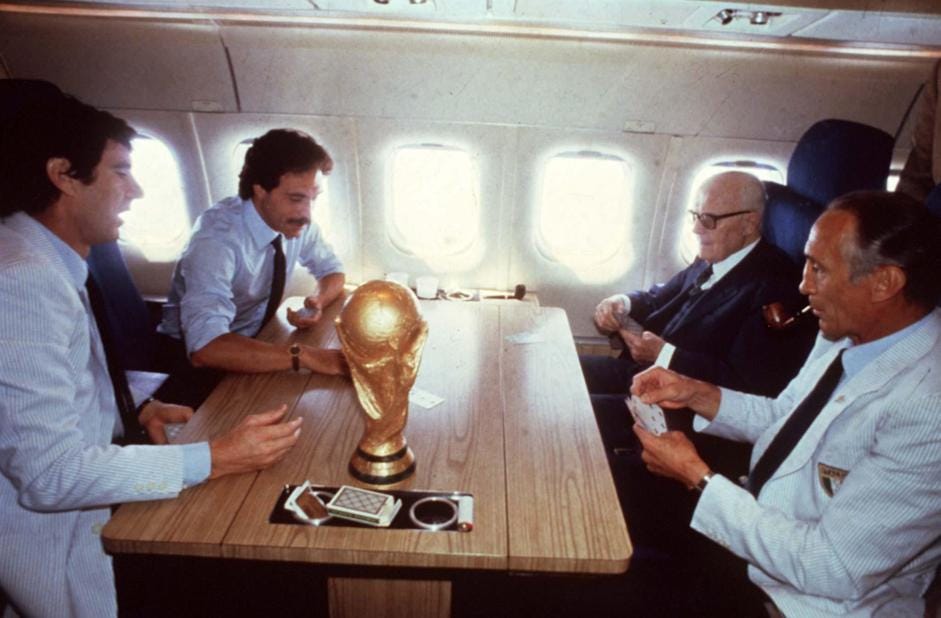
Alessandro Altobelli added a third. Breitner scored a late consolation goal for West Germany. In the stands, Italian President Sandro Pertini — a former anti-Fascist partisan who had escaped a Nazi death sentence — celebrated each goal exuberantly, waving his pipe and ignoring protocol. Beating Germany held both personal and national symbolic value for him. Italy had won 3–1, claiming its third world title, 44 years after the last.
Conclusion 🔎
Italy’s 1982 World Cup victory was more than a sporting triumph; it was a turning point for a fractured nation. After a decade scarred by terrorism, kidnappings, economic crisis, and tragic massacres — like the 1974 bombing in Brescia’s Piazza della Loggia — the country was exhausted, divided, and traumatized.
The Notti Magiche (Magical Nights) of Spain, with Paolo Rossi’s goals and Tardelli’s scream, united millions of Italians in an explosion of collective euphoria. Sandro Pertini’s celebrations encapsulated the soul of a country rediscovering joy. That 3–1 victory over West Germany marked the beginning of a new era — the light-hearted and flashy 1980s.
Commercial television aired nationwide for the first time. Commedie Sexy all’Italiana, Italo Disco, and the political era of Bettino Craxi brought new energy. Italy, at least for a while, tried to turn the page and leave behind the Anni di piombo.
Mundial ’82 became a symbol of rebirth — the moment when, after waves of pain, Italy remembered how to dream and celebrate.
Please share this post with anyone who may find it interesting.
Enjoyed this piece?
If you're into World Cup history, check out Print the Legend, a brilliant newsletter by my friend Conrado, investigating the tournaments that shaped football and the world.